
ON ARCHITECTURE (OA2026) will be held on 2–17 December 2026 in Belgrade, Serbia with parallel events in Australia, South Korea and USA.
This year’s conference, themed “Crosscutting, Exploring New Horizons,” is all about discovering new boundaries within multidisciplinary concepts in science, technology and art. Prepare for insightful keynotes, thematic panel sessions, exhibitions and valuable networking opportunities with peers and innovators.
Full Open call for contributions with submission and registration details will be published soon.
We look forward to seeing you there.
Stay up to date with our newsletter by subscribing below.
Category: News
Monograph by Denis Ambruš awarded at the Salon of Urban Planning

Monograph by Denis Ambruš awarded at the 34th Salon of Urban Planning
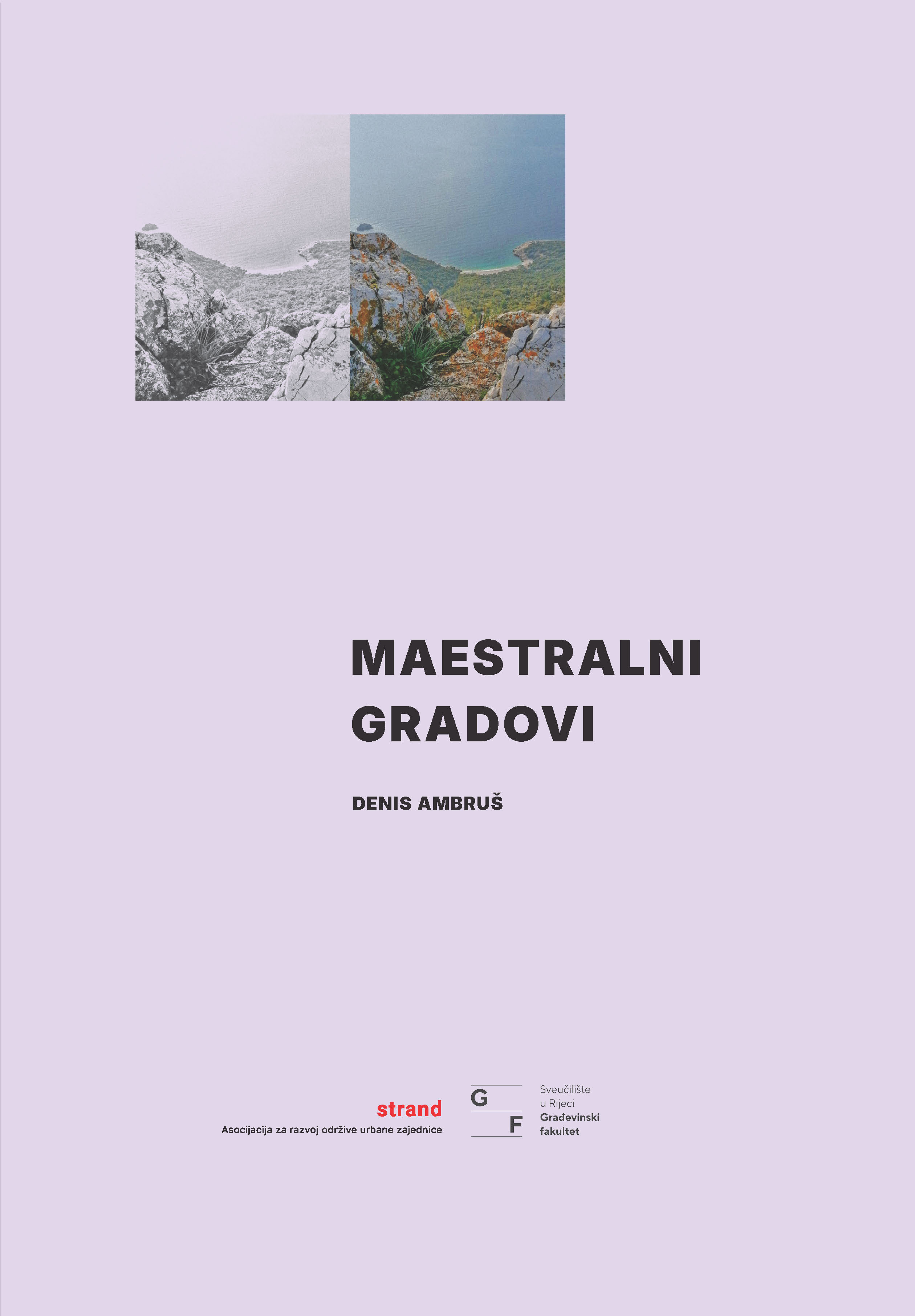
The monograph Maestralni gradovi (Cities of Grand Designs) by Denis Ambruš, published jointly by STRAND and University in Rijeka, was awarded 3rd prize, in the category Publications, at the international Salon of Urban Planning held in Zrenjanin, Serbia, 2025 and organized by Serbian Society of Urban Planners.
Congratulations to Denis Ambruš for the acknowledgement of his dedicated work and ever evolving contribution in urban planning in region of South East Europe.
Thank you to the reviewers Nataša Danilović Hristić, Velimir Šećerov and Ranka Gajić and our editor prof dr Ružica Bogdanović, publishing partner University in Rijeka and everybody who contributed to this publication.
Excerpt of the awarded publication Maestralni gradovi is published on our webpages here www.strand.rs/publishing and here www.strand.rs/maestralni-gradovi.
Monografija Denisa Ambruša nagrađena na 34. Salonu urbanizma
Monografija „Maestralni gradovi“ Denisa Ambruša, koju su zajednički objavili STRAND i Univerzitet u Rijeci, nagrađena je 3. nagradom u kategoriji Publikacije na međunarodnom Salonu urbanizma održanom u Zrenjaninu, Srbija, 2025. godine u organizaciji Udruženja urbanista Srbije.
Čestitamo Denisu Ambruša na priznanju njegovog predanog rada i doprinosa urbanističkom planiranju u regionu Jugoistočne Evrope.
Zahvaljujemo se recenzentima Nataši Danilović Hristić, Velimiru Šećerovu i Ranki Gajić, urednici prof. dr Ružici Bogdanović, suizdavačima Univerzitetu u Rijeci i svima koji su doprineli ovoj publikaciji.
Odlomak iz nagrađene publikacije „Maestralni gradovi“ objavljen je na našim veb stranicama ovde www.strand.rs/publishing i ovde www.strand.rs/maestralni-gradovi
CROSSCUTTING AND FUSION OF DISCIPLINES (OA2025) in the media
International Conference and Exhibition ON ARCHITECTURE 2025 was presented at the Gallery of Science and Technology of the Serbian Academy of Sciences and Arts, 3-17 December 2025, in Belgrade, Serbia.|
Kulturni dnevnik (video)
Watch a feature of the Exhibition ON ARCHITECTURE 2025 on national broadcast.
Zlatni presek (audio)
Professor Ruzica Bogdanovic was a guest in an episode of Zlatni presek, a radio show that explores visual arts and art culture. The show is edited and hosted by Zoja Bojić.
Listen to the episode, in Serbian, about ON ARCHITECTURE 2025 on national broadcast Radio Beograd 2.
Read the English translation of notes from the episode below.
Continue reading “CROSSCUTTING AND FUSION OF DISCIPLINES (OA2025) in the media”Crosscutting and Fusion of Disciplines presented at the International Architecture Symposium of Dicle University

Within the scope of the 4th International Architecture Symposium of Dicle University, Professor Ružica Bogdanović delivered a lecture as an invited speaker in the session themed “Design and Application Practices in Architectural Sciences”.
The lecture titled “Crosscutting and Fusion of Disciplines – A New Approach on Interdisciplinarity in Architecture” presented new cycle of the STRAND “On Architecture” series examining interdisciplinarity in architecture today.
Ružica acted as a member of the Scientific Committee for the Symposium that is organized by Faculty of Architecture at Dicle University, Türkiye that was held 23–24 October, 2025.
This year’s symposium, themed “Design and Application Practices in Architectural Sciences,” aims to address both theoretical and practical approaches that shape the discipline of architecture.
The event seeks to create an interdisciplinary platform for sharing knowledge in the fields of architecture and design, with the goal of contributing current research and innovative work to the academic community.
Browse more here www.dumis.org.tr
Presenting journal Acta Architectonica et Urbanistica (AAeU) published by the University of Sarajevo

Acta Architectonica et Urbanistica (AAeU) is a double-blind peer-reviewed international research journal in the field of architecture and urbanism published by the University of Sarajevo – Faculty of Architecture.
We are excited to announce that Professor Ružica Bogdanović was invited to join Advisory Board as an international member.
Journal focuses on research of cities and buildings and explores a wide spectrum of relevant topics, bridging the gap between theory and practice in the disciplines of architecture and urbanism.
Publication frequency of Acta Architectonica et Urbanistica (AAeU) is two issues per year (June and December). Browse more here aaeu.af.unsa.ba
First prize for the best scientific publication awarded to Denis Ambruš
Best scientific publication was awarded to the monograph by Denis Ambruš
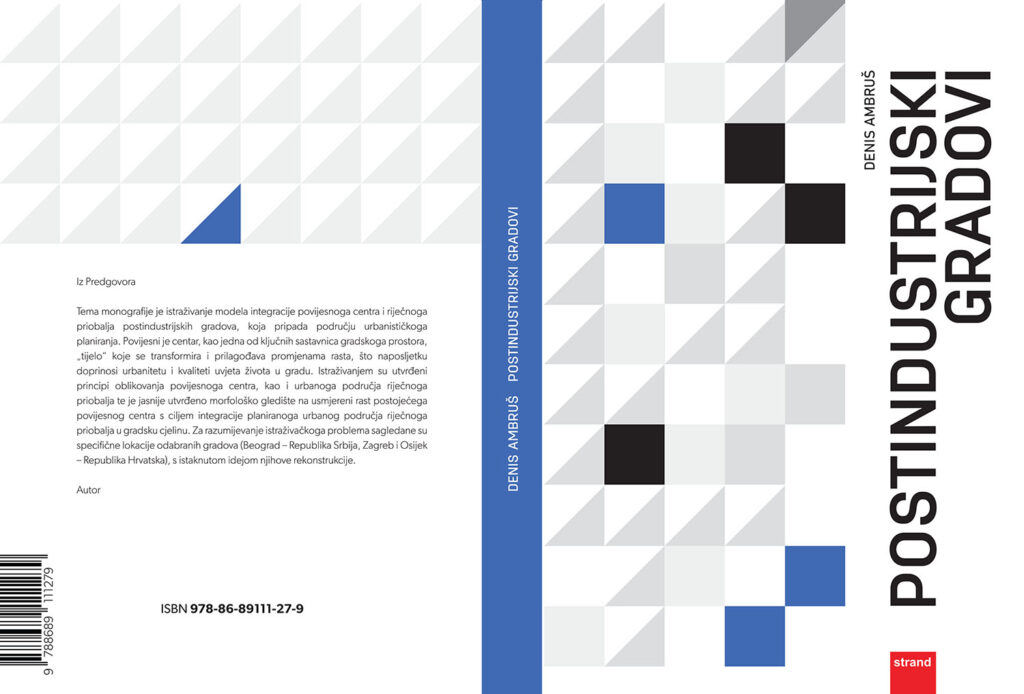
The first prize was awarded to the monograph “Post-Industrial Cities” in the Publications category, out of 20 works, at the 31st international Salon of Urban Planning, held in 2022 in Čačak, organized by Serbian Society of Urban Planners.
The editor of the publication is Ružica Bogdanović and the publisher is STRAND, Belgrade, 2021 (scientific monograph).
The monograph “Post-Industrial Cities” was presented at the exhibition of works held 8 -15 November 2022 in Čačak.
The international Salon of Urban Planning is a traditional annual event of the Serbian Society of Urban Planners, which presents a review of the most significant, current achievements in the field of technical sciences, architecture, urbanism and spatial planning, urban design and realization.
Nagrada za najbolju naučnu publikaciju dodeljena je monografiji Denisa Ambruša
Prva nagrada dodijeljena je radu “Postindustrijski gradovi” u kategoriji Publikacije, od ukupno 20 radova, na 31. međunarodnom salonu urbanizma održanom 2022. godine u Čačku u organizaciji Udruženja urbanista Srbije.
Urednik publikacije je Ružica Bogdanović a izdavač STRAND – Asocijacija za razvoj održive urbane zajednice, Beograd, 2021 (naučna monografija).
Monografija “Postindustrijski gradovi” izložena je u izložbenom prostoru Doma kulture u Čačku, na izložbi radova koja je održana 8-15. novembra 2022. godine.
Međunarodni salon urbanizma je tradicionalna godišnja manifestacija Udruženja urbanista Srbije koja predstavlja smotru najznačajnijih, aktuelnih ostvarenja u području tehničkih nauka, polju arhitekture, urbanizma i prostornog planiranja, urbanističkog projektovanja i realizacija.
Serbian Architectural Journal (SAJ) with Professor Ružica Bogdanović as Guest Editor

We are excited to announce that Professor Ružica Bogdanović was invited to make a contribution as a Guest Editor of the Serbian Architectural Journal – SAJ Volume 13 (saj-journal.org).
SAJ is an international, peer-reviewed journal published by the Faculty of Architecture, University of Belgrade (Serbia), since 2009.
The multi-part Volume 13 is themed LESSONS FROM EXPERIENCE AND PERSPECTIVES FOR EDUCATION.
The Authors of the manuscripts presented in the Volume 13, Issues 1-2:
Rachel Armstrong, Mitesh Dixit, Amber Bartosh, Nora Lefa, Maša Ruane Bratuša, Katarina Anđelković, Marija Mano-Velevska, Slobodan Velevski, Manuel Collado Arpia, Senka Ibrišimbegović and Nedim Mutevelić.
From the Introduction
Three common issues prevail in this publication:• The digital age and Digital Me, technical innovation and the boundaries between my natural me and Digital Me (artificial)
• Education ranging from Latin ūniversitās to the University of Bologna (Università di Bologna), the topic of distance learning, and rethinking how we teach architecture and urban design
• Covid-19 challenges and the Implications of the Pandemic
The online version of the Serbian Architectural Journal (SAJ), Volume 13, is available at scindeks.ceon.rs

Presenting Habitat Professionals Forum (HPF) 2022

Roadmap to a Just and Regenerative Recovery
At the General Assembly (GA) meeting of ECTP-CEU (https://ectp-ceu.eu/) a report on the work of the Habitat Professionals Forum of the UN (The HPF) was approved.
Roadmap for Recovery will launched at the World Urban Forum (WUF) in June 2022 at Katowice Poland (https://wuf.unhabitat.org/).
The Habitat Professionals Forum has produced a Roadmap to Recovery from the major shocks to our global economic social systems. In doing so, it has direct relevance to the findings and recommendations of the UN’s Quadrennial Review on the progress in the implementation of the New Urban Agenda.
This Roadmap is essential if we are to re-set the trajectory of change to deliver sustainable urban development based on the principles in the New urban Agenda of the UN-Habitat and to achieve the UN’s Sustainable development Goals.
This Roadmap is set out in the following documents:
1. An Executive Summary of the Roadmap.
2. The Roadmap itself which sets out 22 propositions to tackle the challenges created by the combined impact of the pandemic, climate change and international conflicts.
3. The Roadmap Background Report which sets out in more detail the reasoning and evidence that supports the Propositions in the Roadmap
In doing so the Roadmap:
• Illuminates the vital contribution of the professional community to Recovery;
• Illustrates the need and potential for more effective interventions; and
• Identifies the changes needed to recover not only from the current pandemic but also to provide resilience to future ‘global shocks’.

NEW URBAN LIVING ROOMS. Workshop (OA2022)
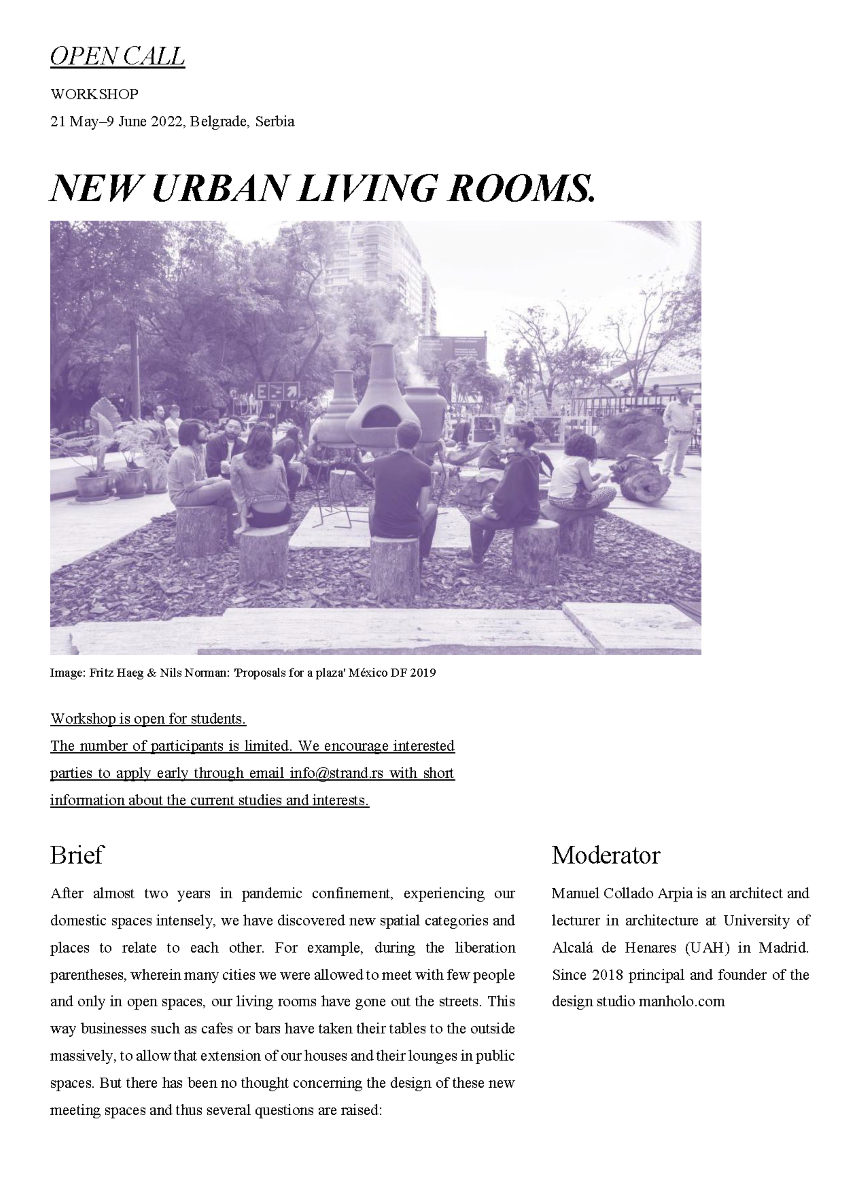
STRAND – Sustainable Urban Society Association is organizing the Workshop in summer 2022 with the support of IFDT – Institute for Philosophy and Social Theory and CPN – Center for the Promotion of Science.
Workshop is organized as a special event of the On Architecture series 10-year anniversary that is themed Philosophy of Architecture.
The concept and moderation of the Workshop by Manuel Collado Arpia. Manuel is an architect and lecturer in architecture at University of Alcalá de Henares (UAH) in Madrid. Since 2018 principal and founder of the design studio Manholo.
Eligible participants of the workshop include undergraduate and postgraduate students in Architecture, Landscape Architecture, Design, Applied Art, Fine Art, Art History, Town Planning and all related creative or engineering fields.
Submit your APPLICATION before 1 MAY 2022 by email info@strand.rs
The number of participants is limited. We encourage interested parties to apply early with short information about the current studies and interests. After the selection of participants and formation of the teams the participants are expected to pay 20 euro registration fee.
Download OPEN CALL
PHILOSOPHY OF ARCHITECTURE (OA2022) marks 10-year anniversary

STRAND – Sustainable Urban Society Association welcomes submission of Papers and Contributions through Open Call for ON ARCHITECTURE 2022 in Belgrade, Serbia.
You are invited to take active participation in Conference and Exhibition hosted by Serbian Academy of Sciences and Arts, Gallery of Science and Technology.
WELCOME to ON ARCHITECTURE 2022, 10th International Conference on Architecture, Technology, Design and Art!