
ON ARCHITECTURE (OA2026) will be held on 2–17 December 2026 in Belgrade, Serbia with parallel events in Australia, South Korea and USA.
This year’s conference, themed “Crosscutting, Exploring New Horizons,” is all about discovering new boundaries within multidisciplinary concepts in science, technology and art. Prepare for insightful keynotes, thematic panel sessions, exhibitions and valuable networking opportunities with peers and innovators.
Full Open call for contributions with submission and registration details will be published soon.
We look forward to seeing you there.
Stay up to date with our newsletter by subscribing below.
Author: STRAND
Monograph by Denis Ambruš awarded at the Salon of Urban Planning

Monograph by Denis Ambruš awarded at the 34th Salon of Urban Planning
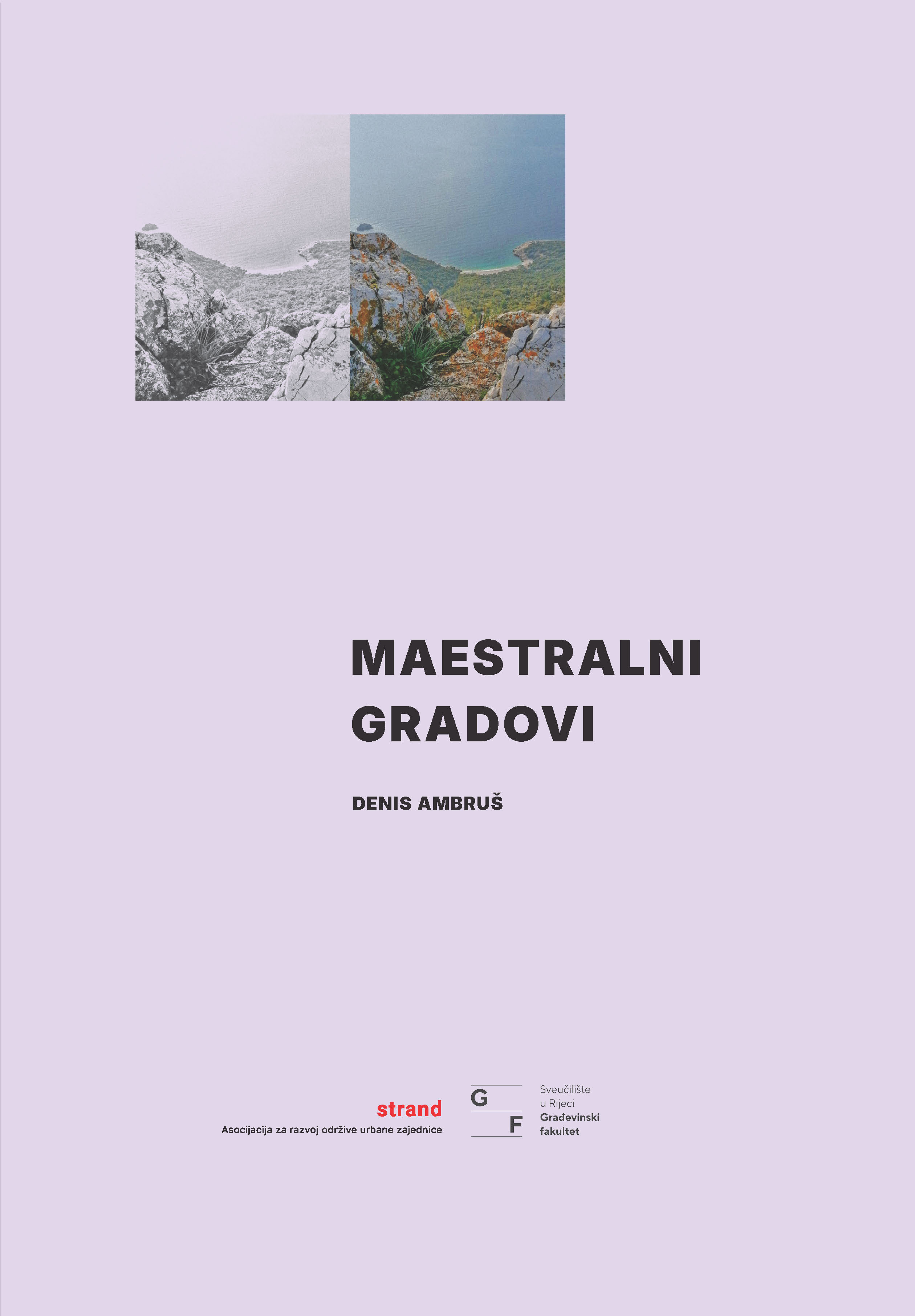
The monograph Maestralni gradovi (Cities of Grand Designs) by Denis Ambruš, published jointly by STRAND and University in Rijeka, was awarded 3rd prize, in the category Publications, at the international Salon of Urban Planning held in Zrenjanin, Serbia, 2025 and organized by Serbian Society of Urban Planners.
Congratulations to Denis Ambruš for the acknowledgement of his dedicated work and ever evolving contribution in urban planning in region of South East Europe.
Thank you to the reviewers Nataša Danilović Hristić, Velimir Šećerov and Ranka Gajić and our editor prof dr Ružica Bogdanović, publishing partner University in Rijeka and everybody who contributed to this publication.
Excerpt of the awarded publication Maestralni gradovi is published on our webpages here www.strand.rs/publishing and here www.strand.rs/maestralni-gradovi.
Monografija Denisa Ambruša nagrađena na 34. Salonu urbanizma
Monografija „Maestralni gradovi“ Denisa Ambruša, koju su zajednički objavili STRAND i Univerzitet u Rijeci, nagrađena je 3. nagradom u kategoriji Publikacije na međunarodnom Salonu urbanizma održanom u Zrenjaninu, Srbija, 2025. godine u organizaciji Udruženja urbanista Srbije.
Čestitamo Denisu Ambruša na priznanju njegovog predanog rada i doprinosa urbanističkom planiranju u regionu Jugoistočne Evrope.
Zahvaljujemo se recenzentima Nataši Danilović Hristić, Velimiru Šećerovu i Ranki Gajić, urednici prof. dr Ružici Bogdanović, suizdavačima Univerzitetu u Rijeci i svima koji su doprineli ovoj publikaciji.
Odlomak iz nagrađene publikacije „Maestralni gradovi“ objavljen je na našim veb stranicama ovde www.strand.rs/publishing i ovde www.strand.rs/maestralni-gradovi
CROSSCUTTING AND FUSION OF DISCIPLINES (OA2025) in the media
International Conference and Exhibition ON ARCHITECTURE 2025 was presented at the Gallery of Science and Technology of the Serbian Academy of Sciences and Arts, 3-17 December 2025, in Belgrade, Serbia.|
Kulturni dnevnik (video)
Watch a feature of the Exhibition ON ARCHITECTURE 2025 on national broadcast.
Zlatni presek (audio)
Professor Ruzica Bogdanovic was a guest in an episode of Zlatni presek, a radio show that explores visual arts and art culture. The show is edited and hosted by Zoja Bojić.
Listen to the episode, in Serbian, about ON ARCHITECTURE 2025 on national broadcast Radio Beograd 2.
Read the English translation of notes from the episode below.
Continue reading “CROSSCUTTING AND FUSION OF DISCIPLINES (OA2025) in the media”On Architecture (2025) Exhibition Book
OA2025 — Exhibition Book
ISBN 978-86-89111-41-5
CIP - Каталогизација у публикацији
Народна библиотека Србије, Београд

72(082)
711.4.01(082)
INTERNATIONAL Multimedia Event On Architecture (13 ; 2025 ; Beograd)

On architecture - Crosscutting and fusion of disciplines : exhibition book / [[within] Thirteenth International Multimedia Event On Architecture], Belgrade, 2025 ; [editor Ružica Bogdanović]. - Belgrade : STRAND - Sustainble Urban Society Association, 2025 (Belgrade : Grid studio). - 65 str. : ilustr. ; 23 cm
“ ... based on the concept of an interdisciplinary, international, multi-location conference, with exhibition and a panel.” -- > Preface. - Tiraž 100. - Str. 5: Preface / Editor. - Deo sadržaja dostupan očitavanjem QR koda.

ISBN 978-86-89111-41-5

a) Архитектура - Зборници b) Урбани дизајн - Зборници
COBISS.SR-ID 180474889
Explore the 2025 Exhibition Book titled ‘On Architecture — Crosscutting and Fusion of Disciplines’, ISBN 978-86-89111-41-5.
2025 MicroMacro Awards
ON ARCHITECTURE 2025 EXHIBITION
(international, juried with awards, open call)
International exhibition OA2025 with MicroMacro Awards was held 3–17 December 2025 at Gallery of Science and Technology of the Serbian Academy of Sciences and Arts in Belgrade, Serbia.
MicroMacro Awards were given to best exhibition entries by the international Jury consisting of previous winners of MicroMacro Awards series – Francesco Carota (Italy, USA), Senka Ibrišimbegović (Bosnia and Herzegovina), Maja Dragišić & Milan Božić –SPRING studio (Serbia) and Stahl Stenslie (Norway) . The Jury awarded two Mentions, three Special Mentions, a Special Award and main prize – the MicroMacro Award across four categories to winning authors and teams based in Serbia, Montenegro and Lithuania.
MICROMACRO AWARD
Winners of the main prize
Awarded to
Ivan Šuković, Dejan Todorović, Emir Šehanović (Serbia, Montenegro)
In the Category
Science, Technology and Architecture
For the Project
Terram Intelligere: INTERSTITIUM
SPECIAL AWARD
For Science and Technology Advancement
Awarded to
Davor Ereš, Jelena Mitrović, Igor Pantić, Sonja Krstić, Ivana Najdnović, Petar Laušević (Serbia)
In the Category
Science, Technology and Architecture
For the Project
UNRAVELING: New Spaces
SPECIAL MENTION
For Media and Representation
Awarded to
Simona Žemaitytė (Lithuania)
In the Category
Phenomenology of Architecture
For the Project
Dancing Landscapes, Volcanic Breath
SPECIAL MENTION
For Pedagogy and Community Engagement
Awarded to
Course Leader: Ivan Rašković, Course Coordinator: Jelena Bogosavljević,
Assistants: Mila Mojsilović, Snežana Zlatković, Bojana Jerković Babović, Dejan Todorović, Ana Zorić, Ivan Filipović, Dušan Stojanović, Nemanja Kordić, Dalia Dukanac, Vanja Spasenović, Petar Cigić, Jelena Ilić, Sonja Dedić, Aleksandra Subotić, Relja Petrović (Serbia)
In the Category
Phenomenology of Architecture
For the Project
24/7: Spaces of Collective Practice, Learning through collaborative discussions and action drawing
SPECIAL MENTION
For Technology and Innovation
Awarded to
Meir Michanie, Bojana Sićović (Serbia)
In the Category
Architecture and New Media
For the Project
transFORM[ations]! casas experimentales
MENTION
For Urban Design
Awarded to
Đorđe Alfirević, Božidar Manić, Borjan Brankov, Tanja Njegić, Sanja Simonović Alfirević, Aleksandra Ristić (Serbia)
In the Category
Showcase Presentations — New ideas or project realization
For the Project
Urban-Architectural Competition for the Conceptual Design of the Zoo within the Entertainment and Recreation Park at Ada Ciganlija
MENTION
For Interior Design
Awarded to
Milena Kordić, Andrej Dolinka (Serbia)
In the Category
Showcase Presentations — New ideas or project realization
For the Project
Lines of Resistance: Exhibition design for Kun: Artist – Worker – Fighter
Existence and the Spatial Memory of Gaza: The Case of Al-Alami Historical House
Abdurrahman Mohamed
https://doi.org/10.60152/8b1agsz1
Abstract: Gaza, Palestine, has been suffering from war for years. Theories of architectural conservation fall helpless in dealing with dangerous situations in conflict regions. The preservation of Al-Alami house came as a culmination of great efforts and proved how the preservation of architectural heritage is usually in need, more than theoretical arguments, for well and determination that is fed by cultural awareness and dignity. Instead of relying on large-scale conservation plans, Iwan Center for Architectural Heritage at the Islamic University of Gaza (Iwan) relied on the theoretical framework of conservation under sever difficulties: to activate local partnership, community participation, networks of volunteers, minimal gradual conservation, and adaptive reuse. The preservation of Al-Alami house proved that the context and the innovative conservation approach are of great importance. It is true that this will not protect heritage from the devastation of war. But it represents the rescue thread for conflict regions.
Keywords: architecture, culture, conservation, urban, community, partnership, Al-Alami house
How to cite this Paper (Harvard referencing style):

Mohamed, A.(2025) ‘Existence and the Spatial Memory of Gaza: The Case of Al-Alami Historical House‘, in R. Bogdanović (ed.) On Architecture — Crosscutting and Fusion of Disciplines, Proceedings. Belgrade, Serbia: STRAND, pp. 329–336.
See publication On Architecture (2025) Conference Proceedings
Tourist Destination Poreč
Denis Ambruš, Vlatko Dusparić
https://doi.org/10.60152/x7e4vd05
Abstract: The small peninsula on the western coast of Istria represents the landscape level of the existential space of the city of Poreč. Through a conscious choice of construction sites, the urban level of the existential space of the planned city/colony of ancient Parentium (Poreč) was shaped. On the relatively small area of the peninsula, a strict orthogonal system was applied with longitudinal and transversal streets forming blocks of rectangular base. The configuration of the urban level of the existential space continued to develop in the direction of the decumanus towards the inland, occupying natural areas. Research into the urban identity of the existing urban structure of Poreč points to the most important elements of identity:
• valuable urban spaces of the historic core on the peninsula and its extensions towards the mainland created on the block grid.
• ensembles and individual buildings of the highest value (Euphrasian Basilica, palaces, interpolation of the Neptun Hotel, …).
• corridor-like dispersion of tourist facilities in the urban coastal area as the prevailing spatial pattern.
• the interweaving of city and nature at the city edges (the sea, greenery in the hinterland that in some parts approaches the coast).
The existing urban structure of Poreč indicates mistakes that, in our opinion, relate to hotel complexes located along the coast and multi-family residential areas. The analysis points to the problem with interventions in the renovation and reconstruction of existing hotel points, in which tourist resources – nature – are consumed. The altered surroundings thus become irrelevant as a reason for tourist visits. Problematic are also the multi-family housing settlements built in the 1950s, constructed in line with the prevailing practices of modern urbanism that interrupt the continuity of the block matrix as part of the urban identity. The fragmentation of the urban structure is also contributed to by tourist facilities that occupy large parts of the urban coastline in a punctiform manner. The observed shortcomings indicate the need to protect public interest in the city’s spatial planning process.
Keywords: Poreč, tourist destination, urban identity, protection of public interest
How to cite this Paper (Harvard referencing style):

Ambruš, D. and Dusparić, V. (2025) ‘Tourist Destination Poreč‘, in R. Bogdanović (ed.) On Architecture — Crosscutting and Fusion of Disciplines, Proceedings. Belgrade, Serbia: STRAND, pp. 323–328.
See publication On Architecture (2025) Conference Proceedings
Schematizing Museum Architecture: Interpreting Spatial Relations through Diagrams
Bojana Sićović
https://doi.org/10.60152/8v7wptof
Abstract: In contemporary architectural discourse, the museum emerges as a distinct phenomenon—a convergence point of diverse spatial-temporal determinants and values. By undergoing a paradigmatic transformation during the 20th century, museums ceased to serve merely as passive repositories of artworks and were redefined as experiential spaces that actively communicate—both with the viewer and with their architectural and spatial context. Within this dynamic interaction, exhibition design has been identified as a significant mediating layer in the relationship between architecture and the exhibit. Moreover, additional spatial determinants can be recognized as contributing to the overall experience, including dichotomies such as exterior–interior, known–unknown, room–path, skin–content, protection–presentation, and real–virtual. Accordingly, this study explores the architecture of contemporary museums through the lens of organizational formal interconnectedness, spatial structure, and perception. In this framework, museums are considered as specific patterns—both semiotic and experiential—subsequently interpreted through cognitive schemata into spatial constructs. The research methodology is primarily inductive, beginning with a literature review and analysis of relevant examples from contemporary architectural practice. This is followed by the classification and schematization of observed spatial constructs (regularities, principles, conclusions). The objective is to enable a form of unlayering of the museum’s integral whole through visual translation into diagrammatic structures. The study aims to contribute to a deeper understanding of the complex structural-functional relationships within contemporary museum architecture, while also opening avenues for the development of novel spatial relationships and interactive, innovative practices—particularly through the application of advanced technologies.
Keywords: schematization, architecture, contemporary museums, spatial relationships, diagram
How to cite this Paper (Harvard referencing style):

Sićović, B. (2025) ‘Schematizing Museum Architecture: Interpreting Spatial Relations through Diagrams‘, in R. Bogdanović (ed.) On Architecture — Crosscutting and Fusion of Disciplines, Proceedings. Belgrade, Serbia: STRAND, pp. 314–322.
See publication On Architecture (2025) Conference Proceedings
The Architectural Language of Togetherness: Spatial Patterns in the Design of Cohousing Communities
Aleksandra Milošević Pantović
https://doi.org/10.60152/b35wlx7s
Abstract: Cohousing communities represent a distinct housing model that integrates private and shared living, with the aim of fostering daily interaction, mutual support, and a sense of belonging. This paper seeks to identify the characteristic spatial principles that enable the formation of community in everyday life, as well as their potential applicability in other urban contexts. Through an analysis of physical structure and spatial logic, the paper explores how architectural form can serve as an active agent of social cohesion. The case study focuses on the Marmalade Lane housing development in Cambridge (UK), with particular attention to spatial patterns that support a balance between individual space and communal life. Special emphasis is placed on the design of transitional zones, shared courtyards, informal gathering areas, and the organization of movement, examining how these elements enable spontaneous and unobtrusive social dynamics. The aim of the paper is to contribute to a deeper understanding of the role of architectural design in creating sustainable and socially oriented housing models, and to offer a critical framework for rethinking contemporary practices of collective living.
Keywords: cohousing, architectural typology, social sustainability, community-oriented design, spatial patterns, collective housing
How to cite this Paper (Harvard referencing style):

Milošević Pantović, A. (2025) ‘The Architectural Language of Togetherness: Spatial Patterns in the Design of Cohousing Communities‘, in R. Bogdanović (ed.) On Architecture — Crosscutting and Fusion of Disciplines, Proceedings. Belgrade, Serbia: STRAND, pp. 307–313.
See publication On Architecture (2025) Conference Proceedings
Flexible Spaces in Micro Apartments: Regeneration and Transformation of Functional Zones in Contemporary Architecture
Maja Golović
https://doi.org/10.60152/l1rfyslb
Abstract: Contemporary housing challenges related to urban growth, housing crises and changing lifestyle patterns call for sustainable solutions, among which micro housing is increasingly prominent. However, micro apartments are often designed with a focus on quantitative spatial reduction, while qualitative aspects of living and long-term functionality are frequently overlooked. This paper analyzes the quality of micro apartments through the potential for transformation and regeneration of functional zones, living, sleeping, and service areas, with particular emphasis on the living zone as the primary space for adaptation and element substitution. The theoretical framework is based on the ideas of the Metabolist movement, especially the principles of sustainability, modularity, and regeneration, reinterpreted in contemporary architectural practice.The assumption is that micro apartments offering greater spatial flexibility, especially through the transformation of elements within the living zone, provide higher living quality and better adaptability to contemporary needs. The methodological approach is based on case studies of three carefully selected examples: a historical one (Habitat 67 – one residential module), a contemporary international one (Carmel Place, New York – nARCHITECTS) and a current local micro apartment (Apartment in Tomaša Ježa Street – 46th Salon of Architecture, authors Dejan Todorović and Milena Kordić). The analysis enables insight into various spatial design approaches and the long term sustainability of micro housing. The aim of the paper is to contribute to the scientific and professional discourse on micro housing quality within the context of a sustainable urban future, emphasizing the importance of spatial flexibility and the architect’s role in creating intelligent and adaptable solutions within limited floor areas.
Keywords: micro apartment, spatial flexibility, space transformation, regeneration of functional zones, modularity
How to cite this Paper (Harvard referencing style):

Golović, M. (2025) ‘Flexible Spaces in Micro Apartments: Regeneration and Transformation of Functional Zones in Contemporary Architecture‘, in R. Bogdanović (ed.) On Architecture — Crosscutting and Fusion of Disciplines, Proceedings. Belgrade, Serbia: STRAND, pp. 296–306.
See publication On Architecture (2025) Conference Proceedings